

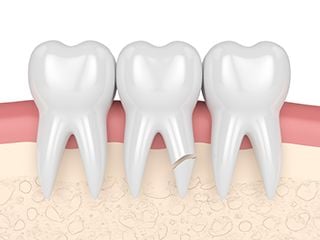
 Root canal therapy is often enough to treat infection in the inner tooth successfully. If pain or inflammation return, however, these symptoms can indicate a new or recurring infection. In such cases, an apicoectomy is a common surgical procedure used to save the tooth and restore the health of the surrounding bone and gum tissue.
Every tooth contains pulp tissue, both inside the crown above the gum line and in the canals within the roots. These canals are small tunnels that travel from the pulp chamber in the crown to the tip of each root.
Nerves and blood vessels connect pulp tissue to the nervous and circulatory systems in the body, entering and exiting the tooth from very small openings in the root tip. An infection in the root pulp can spread to the gum and bone tissue around it through these openings.
An apicoectomy, also known as a root-end resection, is the surgical removal of the apex, or tip, of a tooth’s root. This allows your dentist to access and remove any damaged and infected tissue within and around the root. Apicoectomies are common endodontic surgeries, performed with state-of-the-art diagnostic and surgical tools.
- Often, local anesthesia is all that is needed. If you are interested in sedation, discuss your options with your dentist. Once the area around the root is numb, an incision is made in the gum tissue to allow access to the root and any affected bone tissue.
- Your dentist will carefully remove a few millimeters from the tip of the root, then clean the infected part of the root and remove any inflamed or infected tissue from the bone surrounding it. The root will be filled and the tip sealed.
- Sutures will be used to close the incision, which will dissolve on their own or be removed at a follow-up visit.
- Your dentist will let you know just how to take care of the site after surgery. You should follow post-op instructions carefully to reduce any swelling, and be sure to follow any dietary suggestions and restrictions.
- Pain or sensitivity after the procedure can be treated with over-the-counter anti-inflammatory pain relief, such as ibuprofen, or your dentist might prescribe prescription pain relief. Your dentist will also prescribe antibiotics as necessary to treat the infection.
Most often, an apicoectomy is performed when infection occurs after a root canal procedure. (Your dentist may also recommend this procedure if you have calcium deposits in the root, if a crown or bridge makes a typical root canal impractical, or if the root of a tooth or the bone around it suffers trauma.) Common symptoms of infection include:
- Pain, which can be mild or very intense
- Sensitivity to pressure or temperature
- An abscess, pus, or discolored discharge near the tooth
- Swelling, redness, or tenderness in the gums and tissues around the tooth
- A foul taste in the mouth or persistent bad breath
If you have recurring or new pain or symptoms of infection after a root canal, see your dentist promptly. Left untreated, infection can destroy tooth, gum, and bone tissue. An apicoectomy can be your best option to preserve your tooth and protect your dental health.